
An Engineers Life
Never seems to get boring watching machines build stuff.
Never seems to get boring watching machines build stuff.
Sometime in June of 2012 I released version 3.0 of Countdown Timer. Before that, the last major release was version 2.4 in April of 2010.
I’ve just been busy with other things1. The other reason was that the program had grown from it’s modest roots as a single 321 sloc2 program to a multiple files (80% PHP / 20% JS) with 1,450 sloc. Managing all the files, testing, and integration is — well — hard and not fun. And no one pays me to do it.
It’s taken some time, but I’ve more or less completely redesigned how I develop PHP. I’ve switched to using Aptana, Git Hub, and FirePHP — a PHP integration into FireBug. This was a multimonth project to slowly learn a new way of developing, but it’s been fun! I just spent most of May 2012 essentially rewriting how Countdown Timer works. All the logic is ultimately the same, much of it was converting function and variables into appropriate classes. I’m somewhat particularly happy about being able to extend the DateTime class and use that, although the lastest bug fix release (v3.0.6) was released because of my new found hatred for the DateTime class.
Another big change from 2.4 was taking advantage of some of WordPress’ core i18n3 updates which make handling date and time information a bit easier. Version 3 (and the subsequent dot fix updates) haven’t been a big flashy update, things are more or less where you left them, but you should hopefully see some little things that make you smile and make your life easier. It’s always a challenge to keep making something truly better, but I still have a couple of things I want to implement. However, Countdown Timer is on GitHub and WordPress TRAC, I don’t want this to be code that’s hidden in a cave, so please fork, patch, push and pull away.
Anyway, version 3.0.6 is now out. It fixes some crazy bug with that developed sometime after PHP 5.2 was released that caused the “white screen of death.” There were three issues that I found:
Anyway, several hours were spent backtracing the errors and providing suitable fixes. So, enjoy!
As per tradition:
Read more or download version 3.0.6!
Also, please consider that I spend several dozens hours making updates for each release…have you donated recently?
While most of the coverage for Proposition 1 read nice, there was not a lot of data shown to back it up the claims.
This is frustrating because once you starting digging into the data, you find things like the fact that since 2001 operating costs per vehicle hour have increased 17%1 (when adjusted for inflation).
The $19.70 difference accounts for an additional $68.95 million in operations costs per a year (assuming 3.5 million annual service hours2 ).
Why are per hour operations costs increasing by 17%?
And then there’s the fact that only up to 60%3 of the presumed $1.3 billion4 that would be raised over 10 years with Prop 1 would actually go to Metro. The remaining 40% (and potentially more!) would go to “transportation improvements and to the county for unincorporated area road purposes.”5
This wasn’t a squabble over anyone trying to save a few pennies, I think there is some serious lack of fiduciary understanding and education going on with regard to how Metro operates. After the early returns showed the measure losing, Dow Constantine put it pretty well, “The voters are not rejecting Metro; they are rejecting this particular means of funding Metro.”
Danny Westneat also makes a good observation regarding the campaign itself:
But I wasn’t surprised it failed. Nobody explained what positive changes you’d get for your money, only what you might lose. This was electioneering by threat: Vote yes or I’ll shoot this puppy.
Now the anti-transit crowd will spin this as proof voters have had their fill of transit. And that officials should focus on roads next time.
I don’t buy it. If anything, it was the $50 million in yearly roads repair money in Proposition 1 that had the feel of a slush fund. What would it be used for? Nobody said. It was just to be spread like political butter across 40 cities and towns. The website of the campaign didn’t list a single specific road or bridge that would get fixed using this money.
Oran Viriyincy, a frequent contributor on the Seattle Transit Blog, has provided an excellent breakdown of the actual vote by legislative district as well as a cartogram.


Given the huge amount of support in the Seattle area, I would suspect the planned Seattle-only initiative would pass overwhelmingly.
The proposal would raise $155 million from Seattle property owners over six years. Friends of Transit said that money would be used to buy back endangered routes from King County Metro.
…
Buses that spend 80 percent or more of their time operating inside Seattle’s limits would be eligible for the reprieve.
If the initiative is approved by the city clerk, supporters will need to gather more than 20,000 signatures to put it on the November ballot.
As an interesting side note, if all the districts that had a majority in support of the Prop 1 had double their turnout the the measure would still have failed, but only by 36 votes (out of 512184 theoretical votes), a 0.0070% margin.
Here’s the data: Prop1Votes.xlsx
http://metro.kingcounty.gov/am/reports/annual-measures/financial.html ↩
http://metro.kingcounty.gov/planning/pdf/2011-21/2013/metro-2013-service-guidelines-report.pdf ↩
http://your.kingcounty.gov/elections2/contests/measureinfo.aspx?cid=47942 ↩
http://kuow.org/post/new-bus-initiative-filed-seattle-only-prop-1-continues-fail ↩
http://your.kingcounty.gov/elections2/contests/measureinfo.aspx?cid=47942 ↩
How would you explain a photocopier, in lay terms?
If someone asked you if your office had a photocopier, what would your answer be?
Apparently, this was a challenge for a $64,000-a-year Cuyahoga County worker which the NYTimes has crafted into a rather gripping Op-Doc.
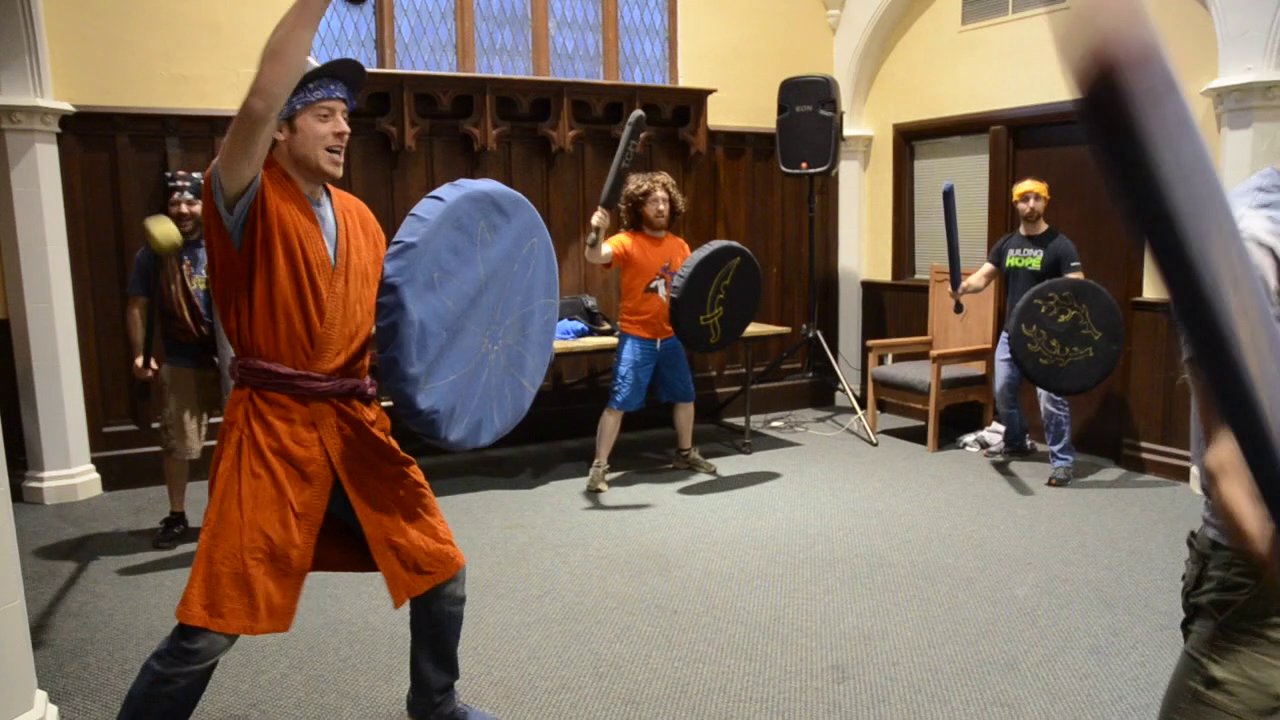
Kolby’s bachelor party was last Saturday. It was an epic day of merriment that included boffing.
This is the story1.
Alternate YouTube link: https://www.youtube.com/watch?v=QJuDyrRpz9Y ↩

Always good to be back home, although The Sweets is out of town until Monday.
Apparently no one has created this list yet, so I compiled the data for the number of Professional Engineers per capita by state. Wyoming, the state with the smallest population, has the most number of Professional Engineers per capita while New York has the least.
Colorado is 17th and Washington is 18th, furthering my theory that the two states are somehow linked to each other.


| State | Population | Total PE | PE per 1000 |
|---|---|---|---|
| Wyoming | 576412 | 6091 | 10.57 |
| Delaware | 917092 | 7300 | 7.96 |
| North Dakota | 699628 | 5073 | 7.25 |
| Alaska | 731449 | 4632 | 6.33 |
| Vermont | 626011 | 3739 | 5.97 |
| New Hampshire | 1320718 | 6374 | 4.83 |
| Maine | 1329192 | 6200 | 4.66 |
| Idaho | 1595728 | 7300 | 4.57 |
| Hawaii | 1392313 | 6123 | 4.40 |
| South Dakota | 833354 | 3585 | 4.30 |
| West Virginia | 1855413 | 7828 | 4.22 |
| Kansas | 2885905 | 11835 | 4.10 |
| Nebraska | 1855525 | 7262 | 3.91 |
| Rhode Island | 1050292 | 3987 | 3.80 |
| Oregon | 3899353 | 14744 | 3.78 |
| Nevada | 2758931 | 10163 | 3.68 |
| Colorado | 5187582 | 18661 | 3.60 |
| Washington | 6897012 | 24678 | 3.58 |
| Louisiana | 4601893 | 16000 | 3.48 |
| New Mexico | 2085538 | 7140 | 3.42 |
| Mississippi | 2984926 | 9701 | 3.25 |
| Virginia | 8185867 | 26598 | 3.25 |
| Utah | 2855287 | 9118 | 3.19 |
| South Carolina | 4723723 | 15000 | 3.18 |
| Maryland | 5884563 | 18655 | 3.17 |
| Alabama1 | 4822023 | 14567 | 3.02 |
| Missouri | 6021988 | 17501 | 2.91 |
| Iowa | 3074186 | 8500 | 2.76 |
| Kentucky | 4380415 | 12043 | 2.75 |
| Arkansas | 2949131 | 8072 | 2.74 |
| Oklahoma | 3814820 | 10000 | 2.62 |
| Arizona | 6553255 | 17136 | 2.61 |
| North Carolina | 9752073 | 23099 | 2.37 |
| California | 38041430 | 90000 | 2.37 |
| Tennessee | 6456243 | 15171 | 2.35 |
| Massachusetts | 6646144 | 15588 | 2.35 |
| Connecticut | 3590347 | 8200 | 2.28 |
| Ohio | 11544225 | 26071 | 2.26 |
| Michigan | 9883360 | 21564 | 2.18 |
| Pennsylvania | 12763536 | 27839 | 2.18 |
| Texas | 26059203 | 56000 | 2.15 |
| New Jersey | 8864590 | 19000 | 2.14 |
| Minnesota | 5379139 | 11440 | 2.13 |
| Georgia | 9919945 | 19997 | 2.02 |
| Florida | 19317568 | 38750 | 2.01 |
| Montana | 1005141 | 1900 | 1.89 |
| Indiana | 6537334 | 11362 | 1.74 |
| Wisconsin | 5726398 | 8905 | 1.56 |
| Illinois | 12875255 | 19708 | 1.53 |
| New York | 19570261 | 27218 | 1.39 |
Sources:
P.S. I successfully passed the Law & Ethics Exam part of the Washington State Professional Engineering licensing process. It’s interesting because it’s an open book exam with links to the applicable RCW and WAC, so really more of a class under the guise of an exam.
includes retired and inactive status ↩
When a problem is presented to me, I typically make a quick determination if needs my personal attention or not. Despite what others may desire of me, I generally let a majority of problems sit for a bit. If the issue does not arise again then I have saved myself from wasting time.
I like the approach David takes with using sticky notes. My fear with sticky notes has been that I would lose one, but that could a non-issue if I assume that most problems never have to be solved and problems that do need to be solved will have multiple contacts points.
Every few days I process these little notes, which means I look at what I’ve written and decide what to do about it. Sometimes I neglect this duty for a while, and end up with a week’s worth (or two) of sticky notes.
I end up throwing most of them right into the recycling bin, because when it comes time to look at it, the thing I wrote down is no longer relevant, or I’ve already done it, or I don’t feel like anything has to be done about it.
…
Your mind tells you there is a problem whenever it detects a somewhat possible unpleasant future experience, which it can do all day, and it happily will if you don’t call its bluff. Of course there’s an infinite supply of potential disasters. These are just thoughts, but they seem like realities, and any one of them can create an emotional pitfall now no matter what actually happens later.
Each of these apparent problems represents itself as something you will have to act on at some point. Ninety per cent of the time, this is a lie. Thoughts are like little politicians; experts at rhetoric, sensationalism self-preservation, unlimited in number, mostly just noisy and useless but occasionally make important things happen.
The genius, perhaps, of David’s article is he calls out the fact that most “problems” aren’t actually problems for anyone vice not being my problem.